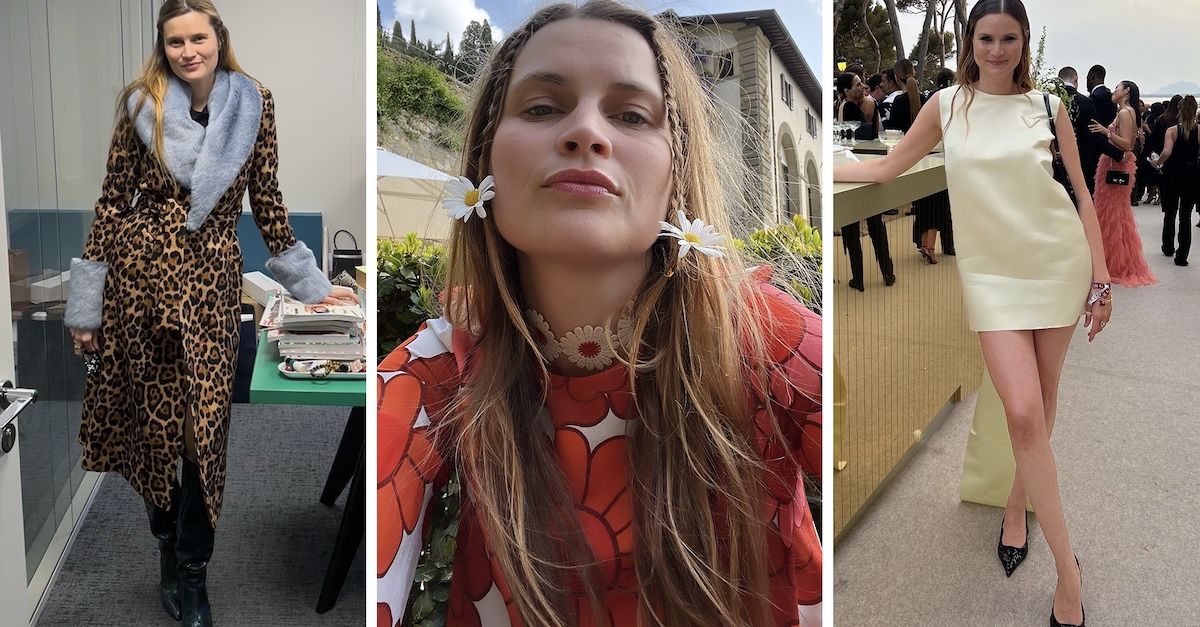
I Showed My Closet to a Therapist — Spoiler: She Wanted to Talk About the Leopard-Print Coat
Eugénie Trochu is a Who What Wear editor in residence known for her transformative work at Vogue France and her Substack newsletter, where she documents and shares new trends, her no-nonsense approach to fashion and style, plus other musings. She's also working on her upcoming first book that explores fashion as a space of memory, projection, and reinvention.
L.’s office looks like the Pinterest board of someone perfectly stable—like an Architectural Digest spread that went a little too far. Everything is white, minimalist, almost clinical, with pops of color clearly meant to “warm up the atmosphere.” A bright red painting (probably too bright) hangs behind the sofa. On the coffee table sits an abstract sculpture I didn’t dare ask about—maybe a hand, maybe a shell, maybe an organ. I’ve always thought doctors, therapists, dentists (even my gynecologist) have an oddly literal taste in art: a bit too symbolic, a bit too on the nose.
The chairs are obviously designer, though I couldn’t tell you which ones. Too low to be comfortable, too expensive to slouch in, the kind of furniture that makes you aware of your posture the second you sit down.
Now, L. She always wears perfect trousers. Not stiff raw denim, not tailored suits either—the in-between kind: slightly masculine, perfectly studied. Neutral cashmere, thin and impeccable, and a dark stone pendant that looks spiritual without drifting into hippie territory. She’s beautiful in that intellectual way—the “I’ve done 10 years of analysis. Have you?” kind of beautiful.
She’s a therapist friend who lives in my building, not my therapist (thankfully, as that would be an ethical nightmare). We run into each other in the stairwell, talk about nothing and everything, and that day I said, a bit too fast, “You know, I’d love to have my wardrobe analyzed.”
She smiles, of course. A slow smile, half amused, half psychoanalytic. And I, caught in my own trap, added, “Do you want to see it?” Silence. Then, “Why not?” I felt instant regret. But a month later, I was at her office, in that too-white space, unpacking the contents of my wardrobe like a confession. She warned me, saying, “I’m not going to analyze you. Just observe.” Which, coming from a therapist raised on Lacan, Anzieu, and Manon Garcia, meant the exact opposite.
The fabric first: A 1960s floral print that evokes both a grandmother on Lexomil and a Jacques Deray movie set.
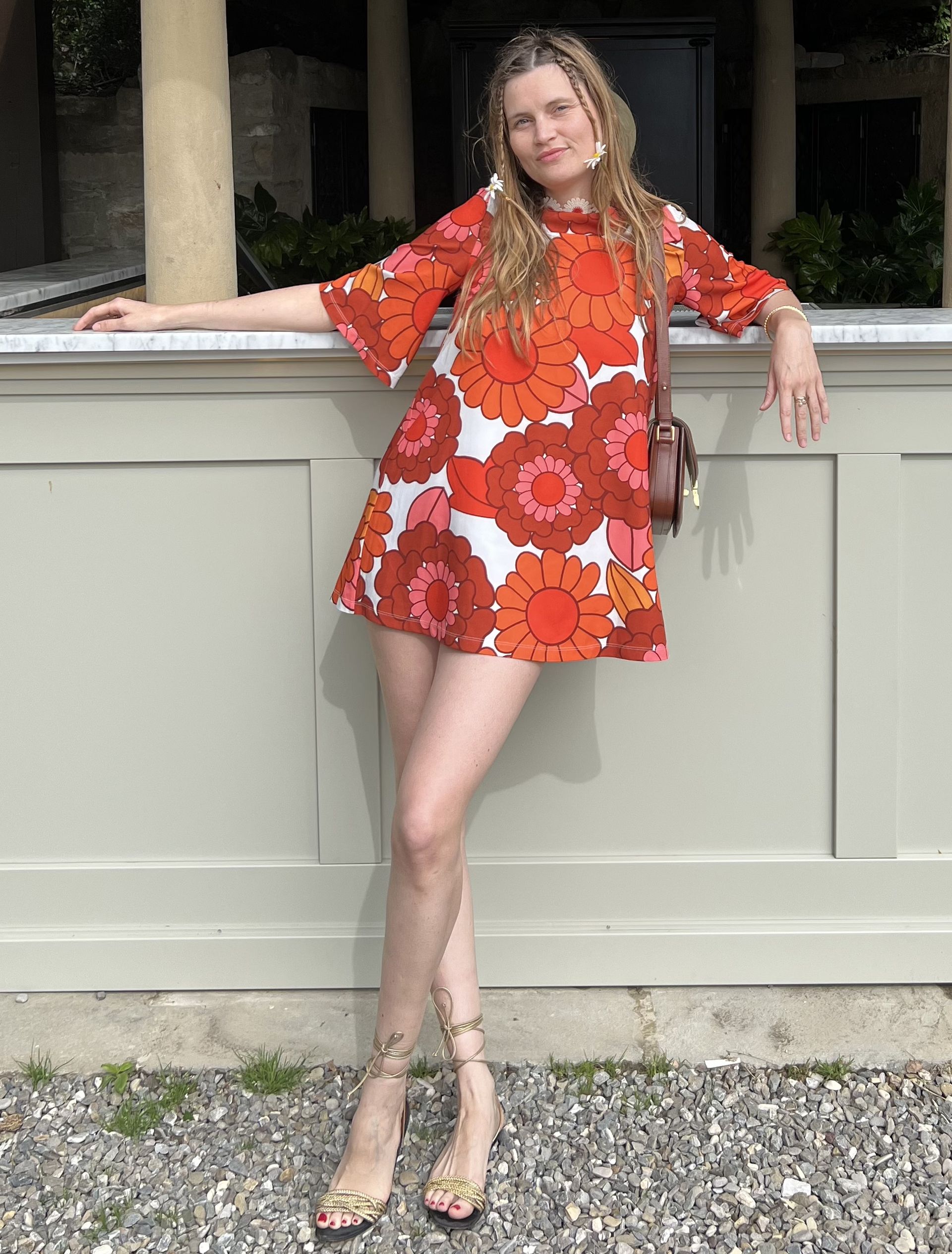
L. looks at the photo and says, “It’s like a piece of upholstery that decided to go for a walk.” And she was right. Worn very short, with two tiny braids framing my face and thin sandals tied at the ankles, the dress slides into a strange territory: not sexy, not innocent, just frankly eccentric. It makes noise with its colors, takes up too much visual space. “The print is the overflow, everything you don’t say out loud, you put on your body,” she added. And that felt truer than anything else. The wallpaper dress is my textile chatter. It talks for me, too loudly, too flowery, too funny. A dress that doesn’t listen but always has something to say.