Means of Expression: How the Queer Community in Caribbean Culture Uses Hair to Tell Their Stories
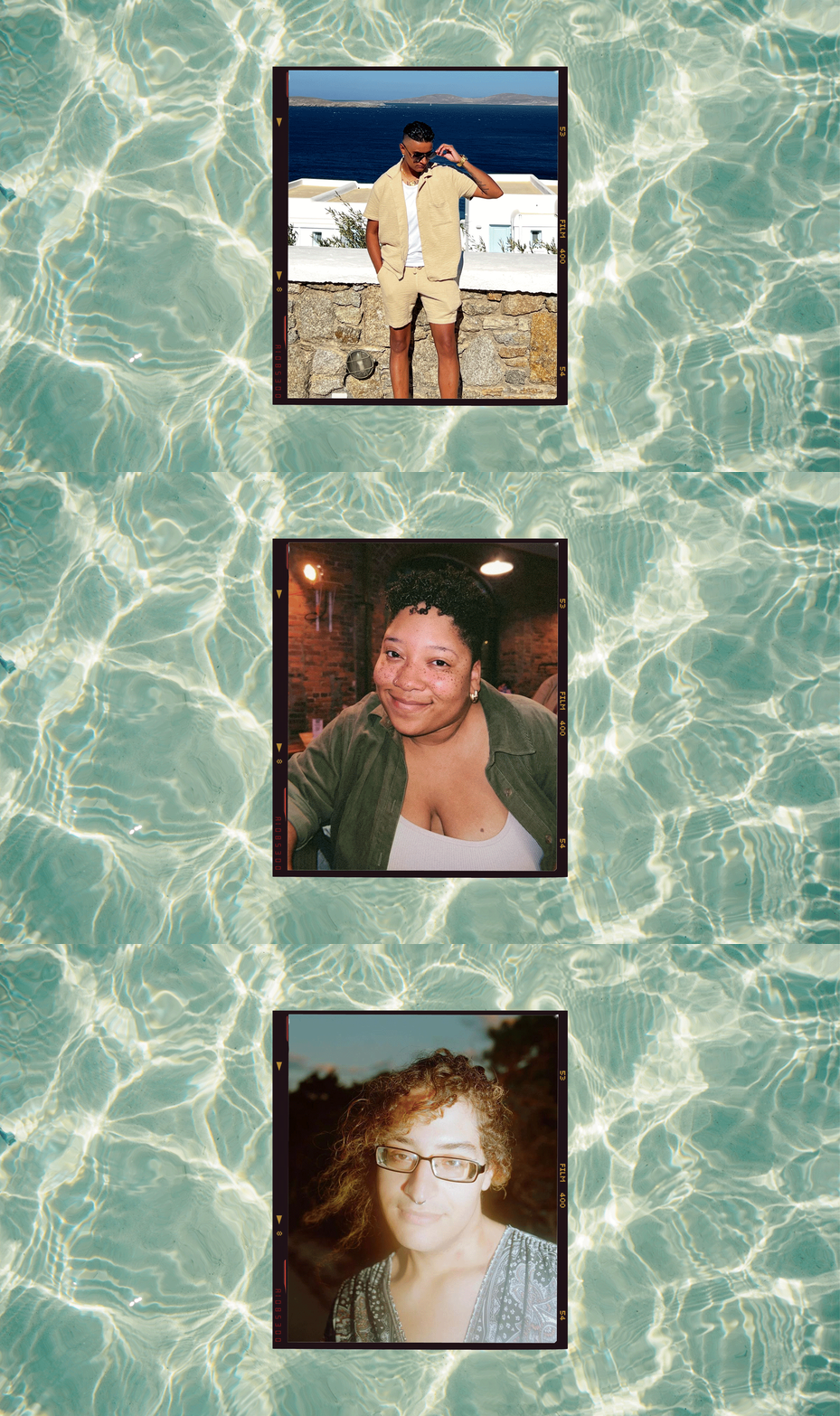
For many Caribbeans, hair plays a huge role in identity. Many countries have their traditional hairstyles that often feed into gender norms and expectations. While this is not inherently meant to be negative, it can be difficult to navigate, especially for those in the LGBTQ+ community.
To dive deeper into the real-life experiences of those who’ve explored their queerness while facing these standards, Who What Wear spoke with three individuals who were willing to share what it means to use hair as a powerful tool for expression and self-acceptance. Below, you’ll hear their unique stories and discover how pride in Caribbean culture can extend to meet each person where they are in their authenticity.
Polo, 31
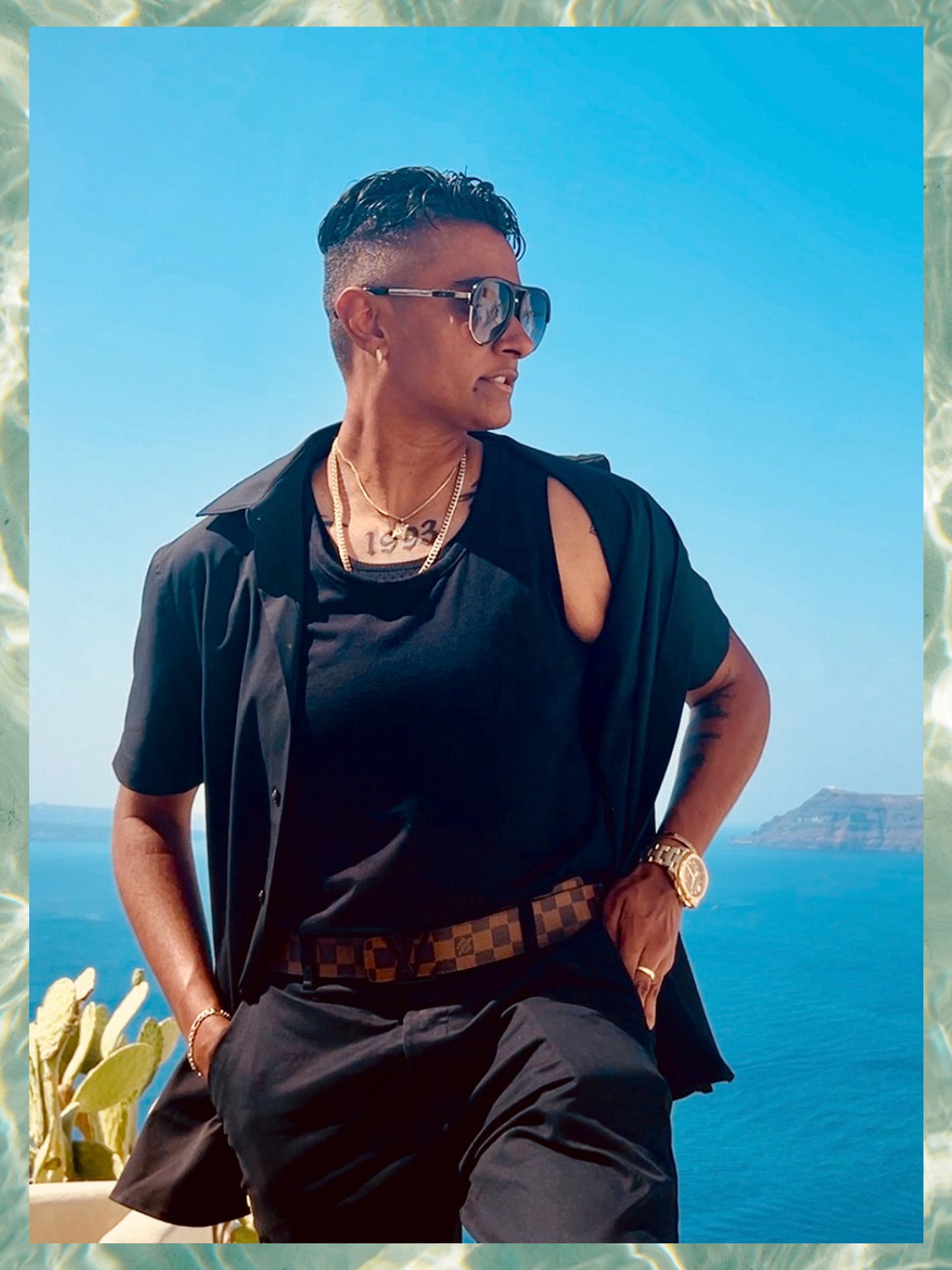
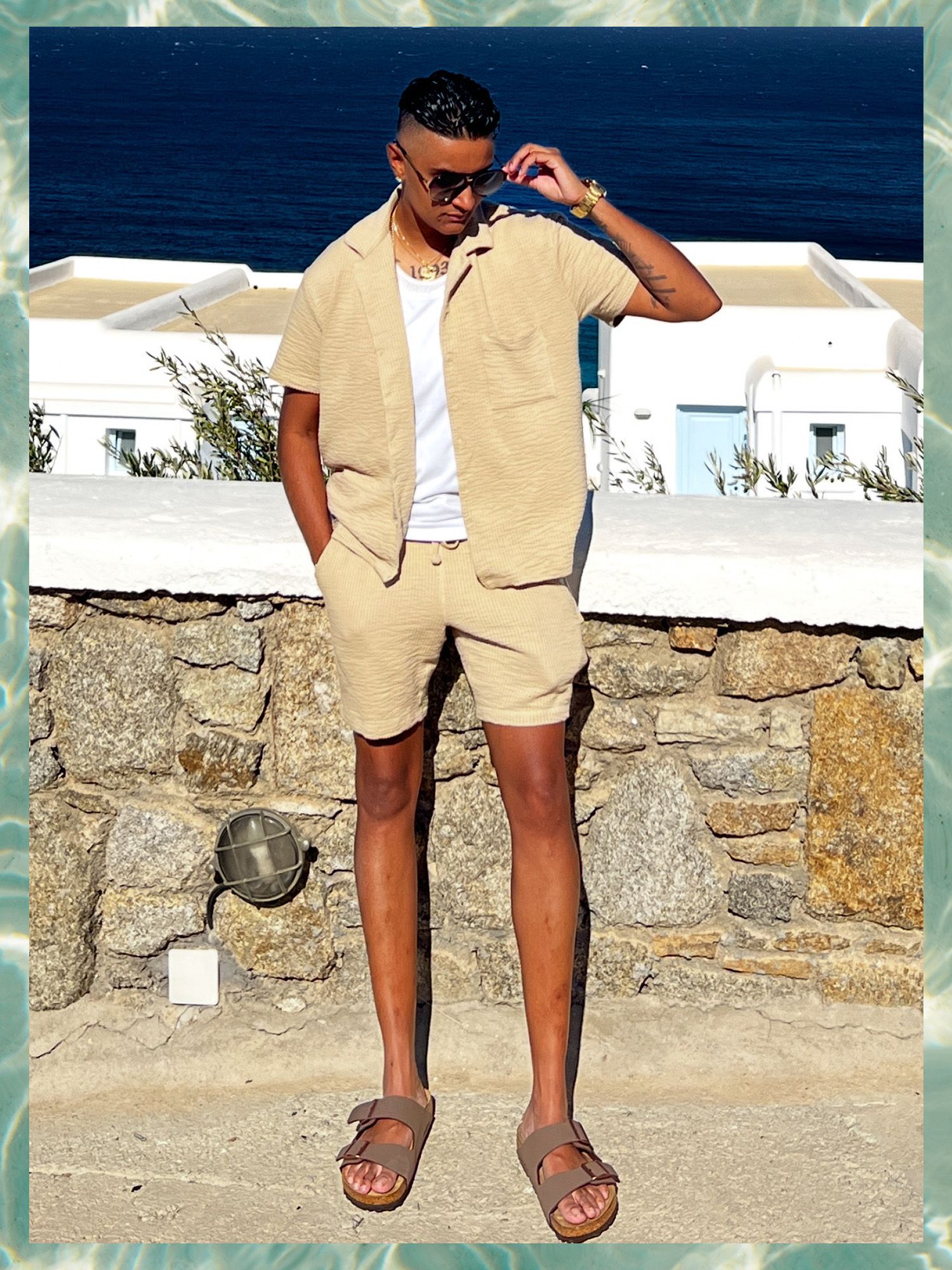
Polo, who currently lives in Long Island, New York, was born in Trinidad before moving to the U.S. when she was 8 years old. She remembers her childhood relationship with her hair clearly, having never been a fan of lengthier looks. She describes her younger self as a tomboy at heart who often kept her distance from dresses and makeup. “I always felt like I was born into the wrong body,” she says. “I feel like my current hairstyle represents who I am today because I was born with masculine features and carried myself in a masculine way.” Polo is Hindu and has always felt that in her past life, she was a man—her hair plays a big role in how deeply she feels that connection.
She used to wear her hair in a bob cut or ponytails, which were considered typical femme-leaning styles in West Indian culture. By age 14, she knew she wanted to cut her hair shorter. “The first thing a West Indian parent is going to say is, ‘You’re going through a phase,’ or ‘You’re just young,’ right? So I had to prove to them that I knew what I was talking about,” she says.
Polo officially came out as lesbian when she was 17 and finally cut her hair at 18. The haircut, she says, felt like coming home to who she truly is. “I felt proud not having the West Indian community bring me down,” she says. “When I saw how I looked, it made me happy. … I don't even have the words for it. Honestly, it was just a speechless moment.” At first, she wondered what people from her culture were going to think, but as she got older, the decision brought her closer to her Trinidadian heritage. She was also able to help others from the same background lean into their authenticity. “If you don’t have that one parent, that’s more understanding, it can get really tough, especially when it comes to cutting hair,” she says. She notes that when others find out she’s West Indian, they’re often surprised that she’s able to present the way she wants and still maintain a relationship with her parents. “It’s like the world’s best feeling,” she says.
Just before coming out, Polo was prepared to be faced with questions. So when her older sister told her it wouldn’t be a surprise to most of her family members, she was relieved. “Half of my family said they always knew,” she said. “I didn’t have to explain myself.” And although she didn’t have friends in the LGBTQ community at the time, she felt equally supported by her core group.
To Polo, her hair is an added layer of calm and safety. She explains that barber shop culture is huge in Trinidad, and it’s often a place where people build confidence, meaning there’s always a strong tie-in with hair. “My hair has the power to express my gender and queerness without saying a word, and I also wear traditionally masculine clothes,” she says. “It aligns externally with the masculine inside me, and it’s a way of breaking away from typical West Indian culture—it’s like my personal flag.”
Being Caribbean feels rooted in strength, but Polo also emphasizes the importance of finding and building spaces where she’s fully accepted. “As a masc-presenting queer person, that balance can be challenging,” she says. “I love when I see more West Indians coming out because it’s just a reminder that I’m not alone.” Her hope? That more Caribbeans in the LGBTQ community can feel supported and empowered to live authentically without fear.